Questions To Ask
A guide to the right questions before hiring someone to move or install heavy furniture. Walk through the decision step by step.
The Problem, Stated
Moving a heavy piece of furniture — a pool table, a slate countertop, a stone fireplace mantel, anything that weighs several hundred pounds or more — is not the same as hiring a moving company to relocate your household. It requires different expertise, different equipment, and a different set of questions. Many moving companies will decline the job. The ones who accept it are working with tight margins and high risk. They need you to be clear about what you are asking for, and you need to know whether they actually understand the work.
A professional who knows your furniture is always better than the cheapest quote you received from someone who has never seen it.
Before you sign anything, you should understand what can go wrong, what the real cost drivers are, and which questions separate a contractor who has done this work a hundred times from one who is guessing. This guide walks you through it.
What It Should Look Like When Done

When to Call a Professional
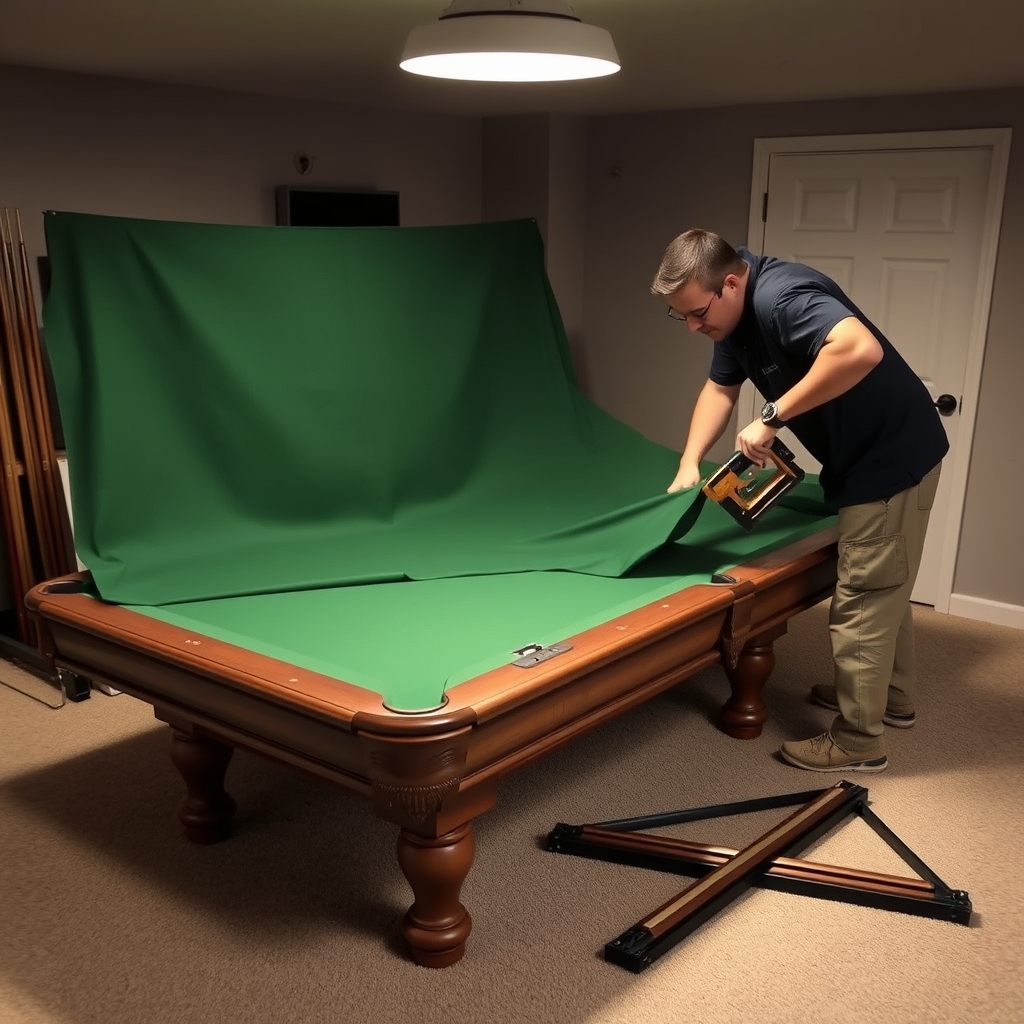
The Options Compared
Three kinds of professionals move heavy furniture: general moving companies, specialty moving companies that focus on pianos and billiard tables, and the contractors who originally installed the furniture. General movers work at high volume with thin margins. They take jobs they understand well and decline the rest. Specialty movers have done this exact job many times. They charge more but you are not paying for their learning curve. Original installers know the furniture intimately but may have moved on to other work. Any of these can be the right choice, depending on what you need.
For a simple move of an assembled table within the same level of your home, a general mover with moving-company insurance may be adequate. For disassembly, refelting, reassembly, or moving up or down stairs, insist on someone with specific experience with that type of furniture. Ask for references. One unexpected cost — a scratched floor or a torn felt — can cost hundreds more than the moving service itself. Insurance protects you both.