The Framing Letters

What to Expect: Pool Table Delivery and Installation Day

Orientation: What This Process Really Involves

Whether you're having a new table delivered or an existing one moved to a different room, the day itself follows a familiar pattern—but knowing what to expect beforehand keeps you from being surprised by the time it takes, the disruption to your space, or the tools and skill the crew brings. A slate pool table is not furniture to be carried casually through your home. The process is methodical, involves specialized equipment, and takes longer than you'd expect if you've never watched it happen. Understanding the timeline and what the professionals are actually doing helps you prepare your space, stay out of the way, and appreciate the precision involved.

A slate pool table installation is part craft, part engineering—the crew's skill is what determines whether it plays true for years to come.

A satisfied homeowner standing in their remodeled game room after pool table installation
The result of a professional installation is a properly setup table ready for years of enjoyment.

Common Sticking Points

How long does the whole process actually take?

For a slate table delivery and setup in a ready room, plan on 3 to 4 hours from arrival to finished play. If the crew needs to disassemble the table for transport—typical for older homes with narrow doorways—add another 2 to 3 hours. Moving a table between rooms in the same house can take 2 to 5 hours depending on stairs and tight corners. The crew will tell you during the pre-visit estimate, and that estimate is usually accurate.

What happens to my walls and flooring during the move?

Professional crews protect walls and doorframes with cardboard and padding, but expect some minor scuffing if your home has unusually tight passages. Your flooring should be protected with moving blankets or plywood runners. Ask the crew to put down floor protection before they begin, and if you're concerned about a particular area, mention it when they arrive. Most experienced teams carry everything they need and will take care of it without you asking.

Do I need to be home the whole time?

You should be present for the initial assessment and walkthrough, and you should be home to inspect the finished table before the crew leaves. If you need to step out during the middle work, that's usually fine—the crew doesn't need your input on the technical portions. Just confirm the timeline when they arrive so you know when to expect them to finish.

What if my doorway is too narrow after all?

This is why the pre-visit measure matters. If the doorway won't accommodate the table whole, the crew disassembles it partially or fully—legs come off, the slate bed may come out of the frame, and the felt is protected with paper. It takes longer and costs more, but it's doable. This is determined during the pre-visit estimate, and the price reflects it.

Next Step: The Move in Action

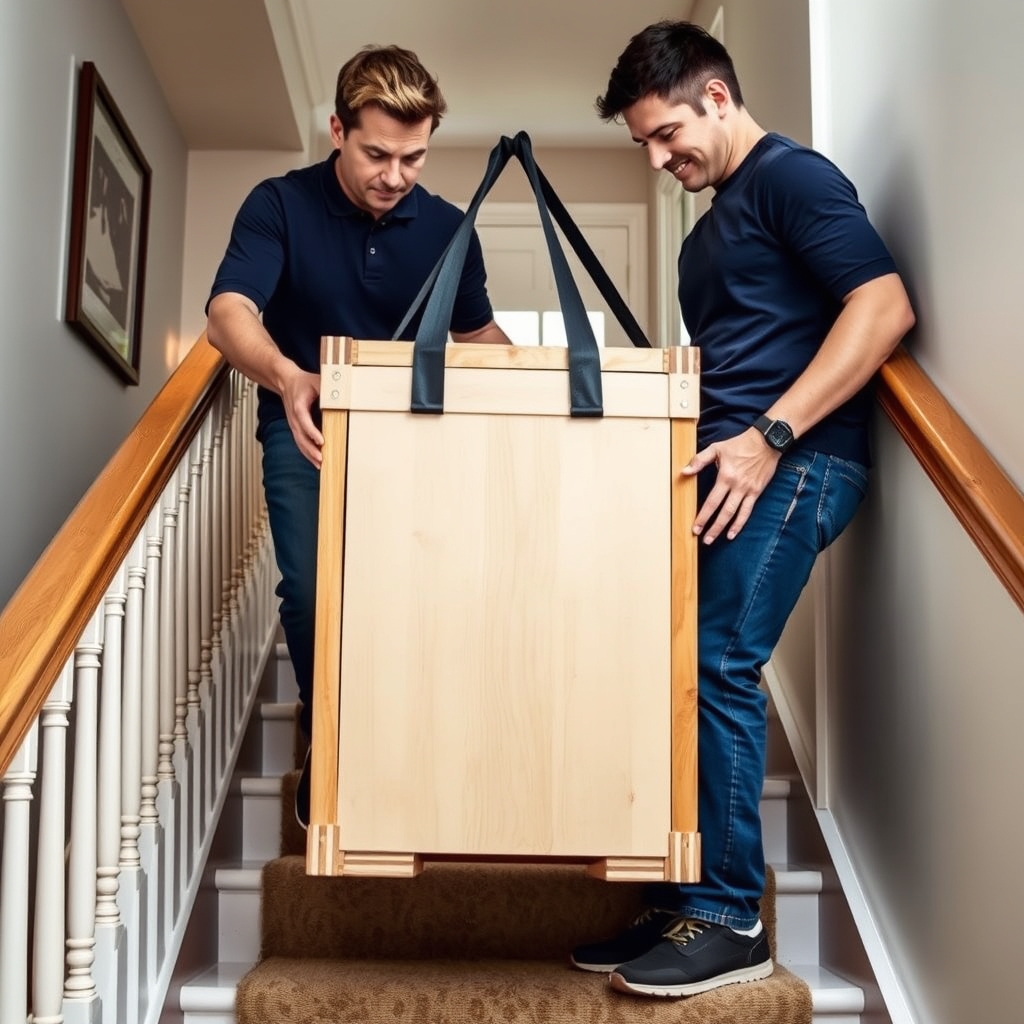
Two professional movers carrying a heavy padded wooden crate down residential stairs with lifting straps
Professional movers use proper equipment and technique to safely transport a slate table through multi-level homes, protecting both the table and your space.

The Key Figures: Weight and Floor Preparation

The weight of your table matters not just for moving logistics but for what's underneath. Slate tables concentrate that weight on four legs, creating point loads on your floor. Residential floors are designed for distributed loads of 30 to 40 pounds per square foot, which is fine for typical furniture. A slate table, standing on legs covering only a few square inches each, creates a concentrated load that can exceed 1,000 pounds of pressure in those small areas. This is why older floors, joists that have weakened, or basements with minimal support can be problematic. The crew will ask about your floor condition during the pre-visit, and if there's concern, you may need floor reinforcement before the table goes down.

How to Use It: Before the Crew Arrives

Clear the path from entry to destination—move furniture, rugs, and décor out of the way. Tell the crew about any tight spots or valuable items they should know about. Have a diagram of where you want the table if the final location isn't obvious. Check that your floor is as level as it can be; the crew will use shims to adjust, but starting with a reasonably level surface helps. Make sure the room temperature is stable; slate and felt are sensitive to temperature swings, and crews sometimes ask to let the table sit for a few hours before play to acclimate. Confirm the appointment time the day before, and plan to be available for the full window they give you. Finally, have water or coffee available—the crew will appreciate it, and it's a small gesture for the skill they're bringing to your home.